Pretoria Old Motor Club will celebrate the 43rd rendition of South Africa’s biggest car show
Sharing the limelight in the Zwartkops pits will be pre-1945 Classics Pretoria Old Motor Club will celebrate the 43rd rendition of South Africa’s biggest car show Cars in the Park is a great family day out to celebrate the first promise of spring in Gauteng
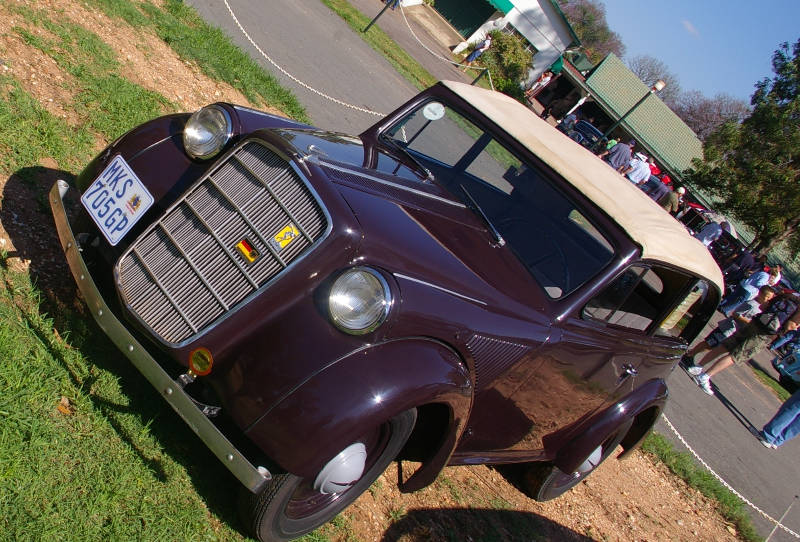
Sharing the limelight in the Zwartkops pits will be pre-1945 Classics
The easiest way to understand what the term “Homologation-Special” means, is to realize that these cars were built by manufacturers with racing or rallying a primary consideration. In order to be able to race one of these special models, the manufacturer had to build a certain number of similar cars available for sale to the public so that they could be homologated by the controlling bodies of motorsport.
The reasoning is that if these requirements weren’t in place, there would be nothing to stop a manufacturer from building a one-off special car and then advertising their successes as being typical of what the standard road-going car of the same make could achieve. So, homologation specials were normally built for general sale, but in very limited numbers, making them more desirable and more collectable than their standard counterparts.
One of the first homologation specials was the Mk 1 Ford Lotus Cortina, built in England from 1963 to 1966. Inspired by Lotus chief Colin Chapman, it used a near-standard Cortina body with a twin-cam Lotus version of the Ford 1500 cc engine. Special widened wheels, lowered suspension, lightweight doors and bonnet and trademark green side-flashes and a black-finished radiator grille completed the picture.
The Lotus Cortina was never officially available in South Africa but two of these most desirable Cortinas were brought in by Ford South Africa to race here in our National Saloon Car Championship. The Lotus Cortinas you will see at Zwartkops on Sunday, August 3 2025, were mostly sold new in what is today Zimbabwe and shipped across our borders in the 1970s and 1980s for our enjoyment many decades later in 2025.
In 1968, the famous South African Basil Green built one of the fastest Ford Cortinas ever produced when he launched his home-grown homologation special in the form of the Perana V6 based on the Mk II version of the Cortina. It used a standard 100 kW version of the Ford Zephyr engine and is identified by a black stripe running sideways across the nose of the car. The most famous of Basil Green’s cars is the Capri Perana V8, introduced in 1971 and capable of 230 km/h in an era when the standard Capri 1600 GT barely managed 160 km/h. Just over 500 made and very few original examples survive today, identified by their black stripes, widened Rostyle wheels and Perana badges.
The Capri Peranas enjoyed huge success on South African road and race tracks, and unsurprisingly General Motors played catch-up in 1973 with an even wilder car called the Chevrolet Can Am. Racer and tuner Basil van Rooyen was the mastermind behind this car, which used a 5.0-litre Camaro Z28 V8 engine in a Firenza coupe body and could accelerate to 100 km/h in an unprecedented 5,5 seconds. Just 100 road-going examples were made to satisfy homologation requirements at the time and today Can Ams are one of the most sought-after collectables in South Africa. But like the Capri Peranas, many clones of this famous car have been made. The original Can Am’s most striking features were an aluminium rear wing and beautiful 13-inch Personal alloy wheels, with a white paint job punctuated by black stripes.
Rallying success was very much on Toyota’s agenda when they introduced the Corolla TRD in the early 1980s, based on the standard rear-wheel-drive Corolla coupe. This was an in-house Toyota product and many examples were produced at Toyota’s Prospecton plant outside Durban to satisfy rallying homologation requirements.
In 1983 Alfa Romeo South Africa developed the GTV6 3.0, a homologation special that now enjoys worldwide status as one of the most collectable Alfa Romeos of all.
A year later, Ford South Africa developed the Sierra XR8. A total of 250 road-going examples were built of this 5.0-litre monster Sierra, and the car was duly homologated for Serge Damseaux and John Gibb in the Presto Parcels example to take on the likes of Nico Bianco and Abel D’Oliveira in the Alfa GTV6 3.0.
Fast forward to the 1990s and the most famous of the South African homologation specials slugged it out, both on the racer tracks and on the roads. These were the BMW 325iS Shadowline and the Opel Kadett 16V Superboss. Mike Briggs took the Group N championship at the dawn of the decade in a Superboss, while the 325iS Shadowline tasted Group N championship success in 1993.
The fanaticism these two models generated for their particular brands is very much alive today and car spotters will know that the BMW 325iS is primarily identified by BBS alloy wheels and a bow-shaped rear wing on the boot. The Superboss is identified by black-finished five-spoke alloy wheels and prominent 16V badges on the flanks and on the tailgate.
These highly collectable cars will be on display in the Zwartkops pits on Sunday August 3, 2025 as part of the Pretoria Old Motor
<span class="bold"Club’s Special Invites display.
<span class="bold"Pre-1945 Classics also part of the Special Invites line-up in the Zwartkops pits
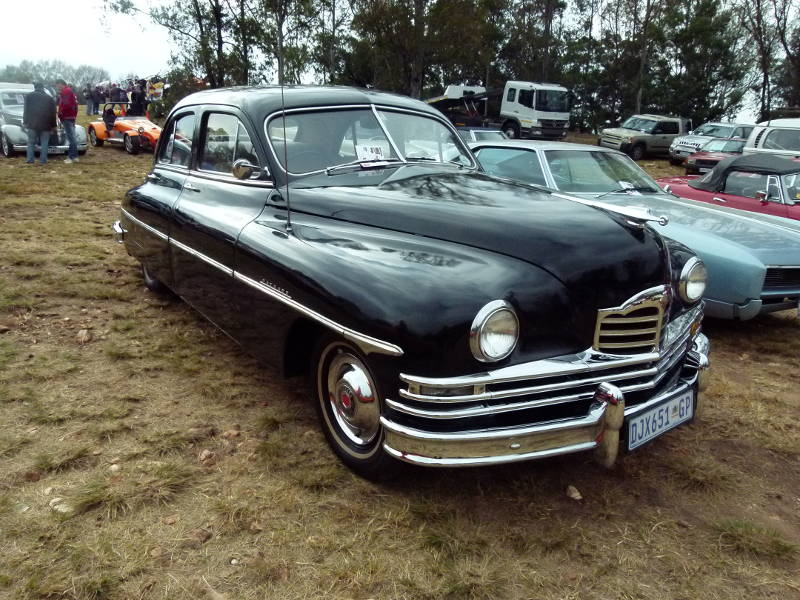
Although World War Two began in 1939, South Africa built cars for local sale until 1942, with the main manufacturers of American designed cars in those days being Ford and General Motors in Port Elizabeth. Ford cars were branded as such, although Lincolns were special Ford-designed models that were imported here.
GM models that were popular included Chevrolet, Buick, Cadillac, Oldsmobile and Pontiac. Other well-known American brands at the time included the famous Packards, noted for their superb build quality.
Other manufacturers had a strong presence with cars that were assembled rather than manufactured in South Africa and these included various makes such as Chrysler’s Dodge, Plymouth and De Soto variants. British models of both Ford and General Motors cars were on sale here in the late 1940s, while other British brands such as Morris and Austin had a strong presence in South Africa dating back decades before Hitler outraged the world in 1939.
German cars were sought-after in the pre-1945 years, and these included examples from Opel, DKW and Mercedes-Benz, while at least one very rare early BMW is known to have made it to South Africa before World War Two.
It is a fact that most cars that went on sale here after World War Two ended in 1945 were in fact pre-war models given a facelift and a nip-and-tuck or two. These Pre-1945 Classics on display at Cars in the Park on August 3, 2025 are all part of the fascinating motorized tableau that constituted our vehicle park 80 years ago.
For more information go to The Pretoria Old Motor Club’s website, www.pomc.co.za
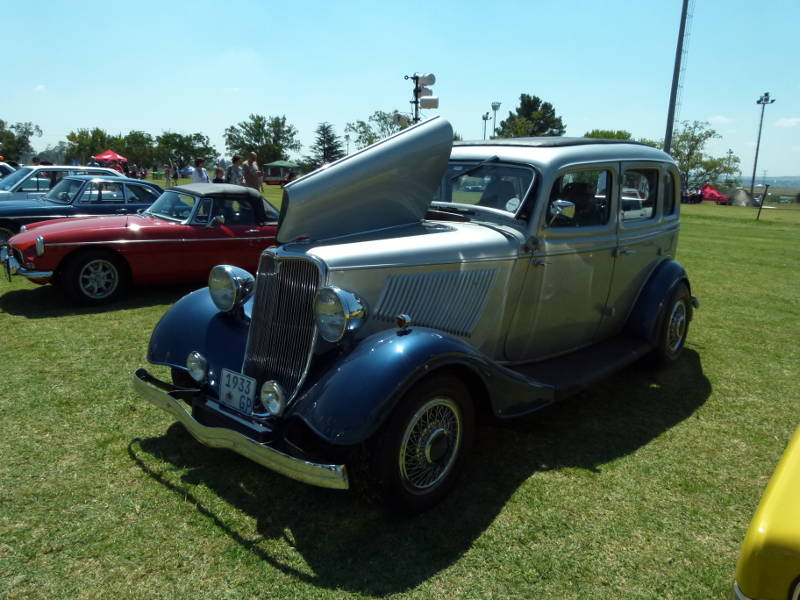
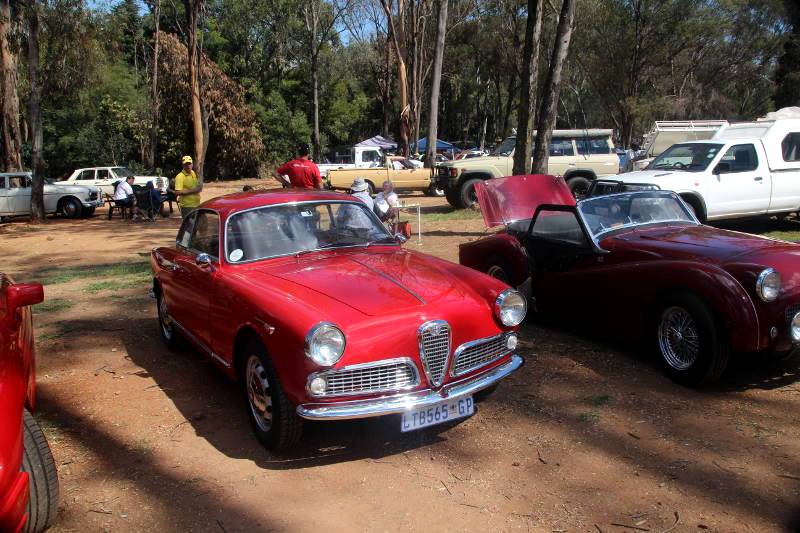
Cars in the Park is a great family day out to celebrate the first promise of spring in Gauteng
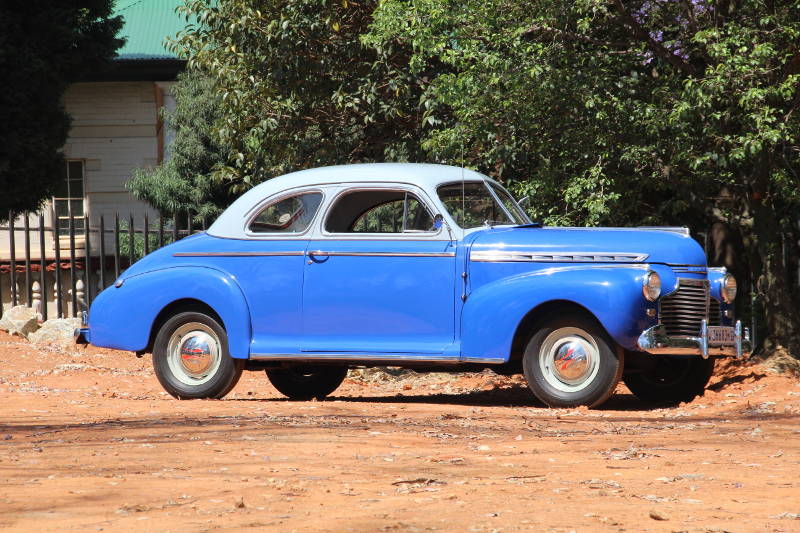
Pre-1945 Classics also part of the Special Invites line-up in the Zwartkops pits